
Which part
of the house?
Open a service sheet for the details worth gathering.
First, describe the change
A symptom is
the beginning of a note.
This organiser helps you describe a previous observation. It does not diagnose a fault or ask you to test the appliance.
A useful observation
Before the programme began
Note the selected programme and what the display or controls showed when you last used the appliance. Record any code exactly; do not guess which part has failed.
Laundry appliance / before the programme began. Add a short description to make a draft note.
Nothing is sent by this organiser. The enquiry form is a separate step.
One enquiry.
Three separate decisions.
- 01
Understand
Identify the appliance, location and reported issue.
- 02
Define
Confirm what an assessment would cover and what it would cost.
- 03
Agree
Authorise any proposed work only after its scope is clear.
Some observations come first
Pause use.
Don’t probe the fault.
If an appliance appears faulty or damaged, stop using it. Do not remove covers or attempt electrical repairs. Keep clear of wet or damaged electrical equipment and seek appropriately qualified help.
If life or property is in immediate danger, call Triple Zero (000). This enquiry form is not an emergency service.
Electrical Safety Office guidance ↗
Before agreeing to work
Read the scope.
Then read the total.
Use figures from a quote you already have. Check whether assessment, labour, parts and other charges overlap before adding them.

Identify the actual appliance
The model matters
more than a guess.
- Make & model
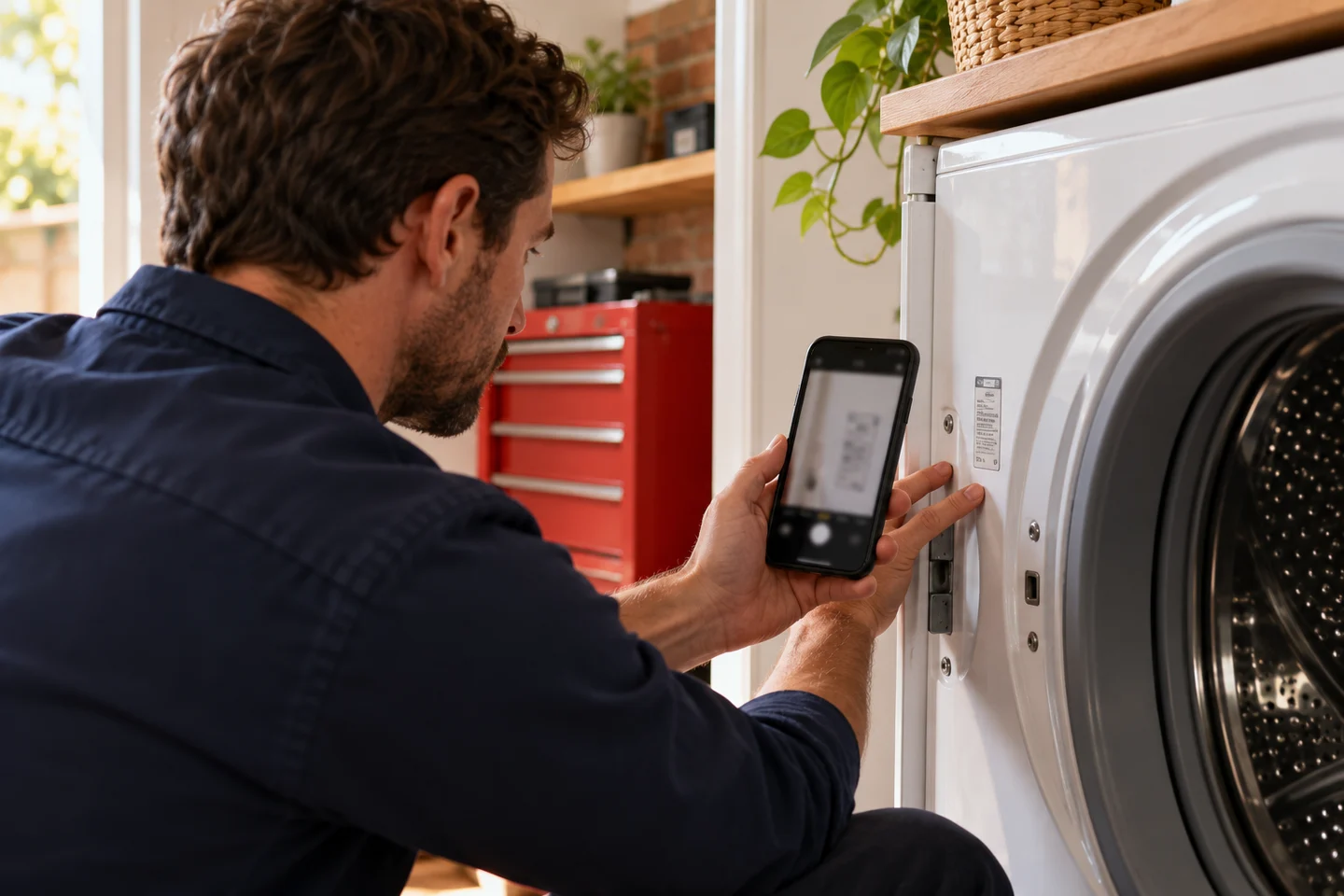
- Copy details from an accessible label or existing paperwork. Do not move heavy equipment or remove panels to find it.
- Approximate age
- A purchase record is useful if you have it. “Not sure” is better than an invented date.
- Displayed code
- Record the exact characters you previously saw, including any spaces or symbols.
A practical part of the conversation
Tell us about
the way in.
A stacked laundry, narrow doorway or integrated cabinet changes the access discussion. Describe the setting before a visit is proposed.
- Is the appliance freestanding, stacked or built in?
- Are there stairs or a restricted access path?
- Does someone else need to authorise access?
Do not pull out or disconnect an appliance to prepare a photograph. Describe what is safely visible.
A useful change in wording
Trade a conclusion
for an observation.
“The programme stopped before the end yesterday. The display showed a code, which I wrote down. I have not run it again.”
Describe what happened and when. Let the assessment establish the cause.A part is only one line of the plan
Ask what the
proposed work includes.
- The reason
- What finding supports the proposed repair?
- The work
- Which part, labour and checks are included?
- The limits
- What remains uncertain, excluded or dependent on availability?

Keep the household context
What changed
in an ordinary day?
A useful note can say when you first noticed the issue, which compartment or programme was involved and whether the behaviour was different from normal.
There is no need to repeat a fault for the sake of this form. Use what you have already observed and say where you are unsure.
Keep a short cold-storage observation log ↗
Room for
a proper explanation.
A proposed visit should have a clear purpose.
A proposed repair should have a clear scope.
Before a visit is agreed
Four things
to have in view.
This checklist helps prepare a conversation. It does not confirm an appointment or certify that an appliance is safe.
0 / 4 preparation points noted
Questions at
the enquiry stage.
Does submitting the form book a visit?
No. It records an enquiry for review. Location, appliance suitability, availability, scope and any price must be confirmed separately before a visit is agreed.
Do I need to know which part is faulty?
No. Describe what you observed. A cause or repair recommendation needs an appropriate assessment; this website does not diagnose it.
What if the model label is hard to reach?
Use existing paperwork or write that the model is unknown. Do not move a heavy appliance, remove a cover or reach into a restricted space just to complete the form.
Are the calculator amounts a quote?
No. The calculator only adds figures you enter. It does not set a price, assess a repair or confirm that any service is available.
What about a warranty or consumer guarantee?
Keep purchase and service records. A manufacturer’s warranty and consumer rights are separate matters. The ACCC provides guidance about remedies for problems with goods and services; start with the business that supplied the product when raising a consumer-guarantee issue.
Read ACCC guidance ↗Put the details together
Start with
one clear note.
Tell us about the appliance and the change you noticed. The form records the enquiry and gives you a reference to keep.
A reference confirms receipt of your note. It does not confirm a visit, repair or price.
Open the dedicated enquiry page ↗